


Loofah & Wood Pulp Dish Sponge
A plant-based dish sponge made from loofah and wood pulp, not plastic foam.
- Loofah and wood pulp, never plastic foam
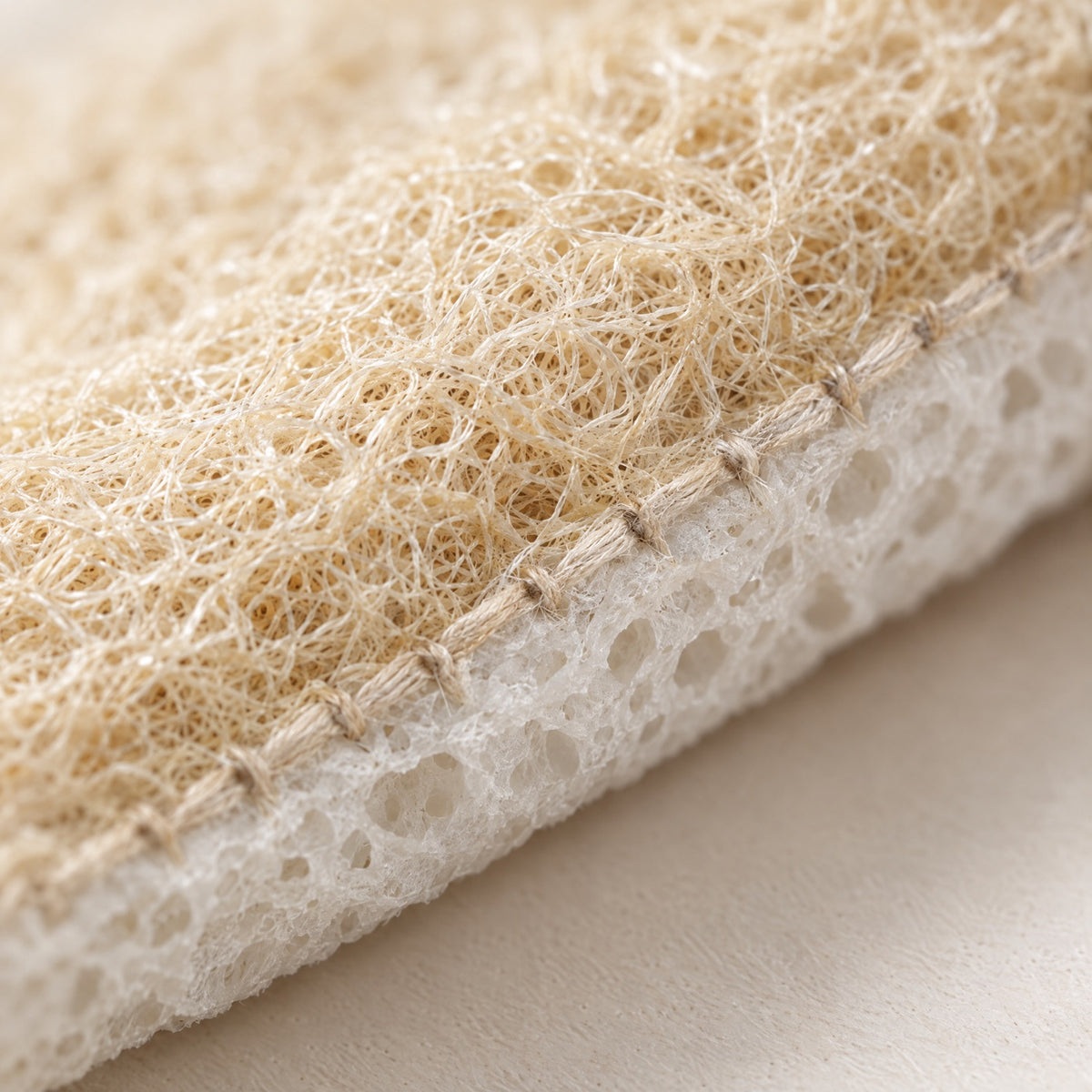
- Stitched with cotton thread, no glue
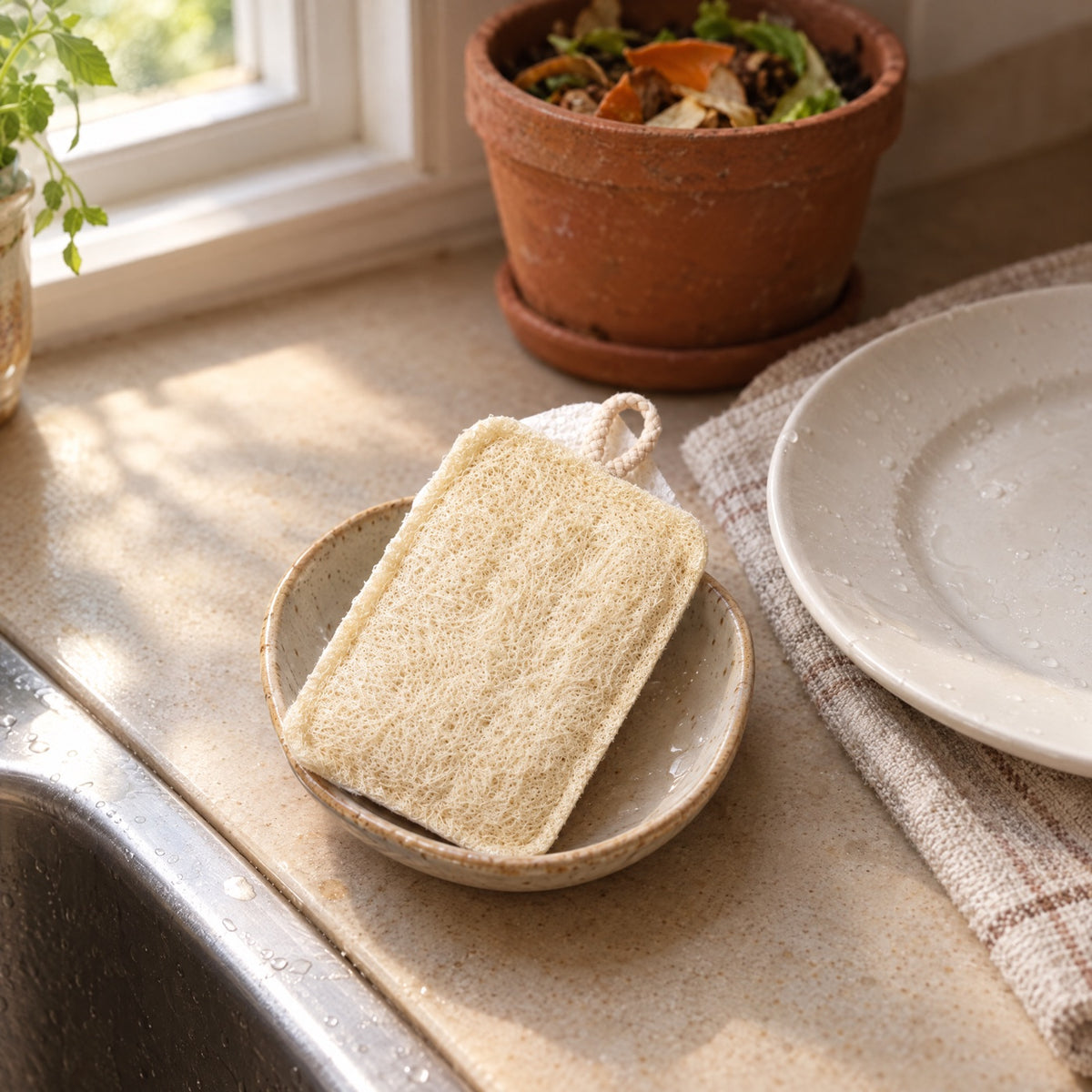
- Cotton loop to hang it up and dry
- Cut it up and compost it at home
- Stitched, not glued
- Cotton loop to hang dry
- Home compostable
What A Sponge Is Usually Made Of
The yellow-and-green sponge in most kitchens is polyurethane foam on one side and a polyester scouring pad on the other. Both are plastic. Every scrub wears a little of each away, and it leaves with the washing-up water.
A Gourd And A Tree
Ours is loofah on the rough side, grown in Guilin, and wood pulp cellulose on the soft side. The two layers are sewn together with cotton thread around all four edges, so there is no adhesive holding them in place.
We asked our factory what else goes in during processing. The answer was nothing — no humectant, no antibacterial agent, no preservative, no dye, no optical brightener. The loofah is bleached with hydrogen peroxide rather than chlorine, and the packs ship in a paper bag.
What people say about it
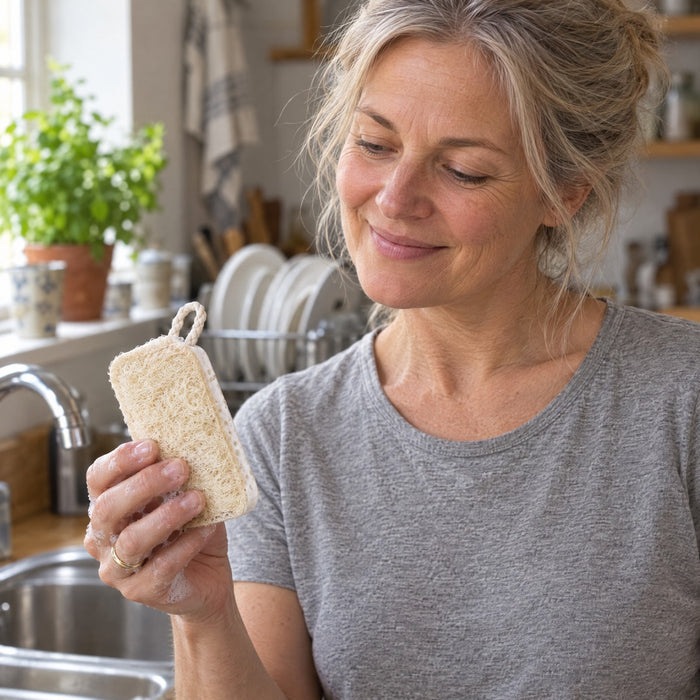
Great material quality and softness
Sarah M.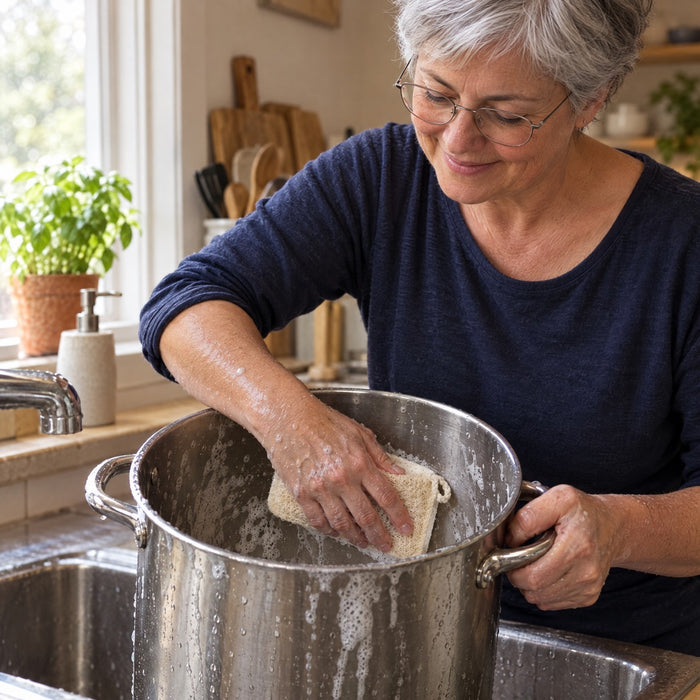
Small footprint, big result.
Samantha W.
Meet The Materials That Replace The Plastic

How it compares to the one under your sink
| Feature | Momoi | Plastic sponge |
|---|---|---|
| Made from plants, not plastic | Yes | No |
| No polyurethane or polyester | Yes | No |
| Sewn with cotton thread, no adhesive | Yes | No |
| Home compostable, cut up first | Yes | No |
| Cotton loop to hang it up and dry | Yes | No |
“Plastic sponge” means the common two-layer kitchen sponge: polyurethane foam bonded to a polyester scouring pad. Our own rows are based on our materials and our factory's written specification.
One Less Piece Of Plastic In The Sink
It is a sponge. It will not change your life. It will do the washing-up without leaving foam crumbs in the drain, and when it has had enough you can cut it up and put it in the compost instead of the bin.
Thirty days to change your mind on unopened packs
If something arrives damaged or wrong, send us a photo and we will refund or replace it. You will not need to post anything back.
Frequently asked questions
The sponge is loofah, wood pulp cellulose and cotton thread. None of those are plastic, and the two layers are sewn rather than glued, so there is no adhesive in between either.
We also asked our factory what else goes in during processing. The answer was nothing — no humectant, no antibacterial agent, no preservative, no dye, no optical brightener. The loofah is bleached with hydrogen peroxide rather than chlorine, and the packs ship in a paper bag, not plastic.
So yes, it is plastic-free. We waited until we had that from the factory before saying so.
Loofah is a coarse plant fibre. It is the scouring side. The wood pulp cellulose side holds water and soap. That is the whole mechanism; there is nothing clever going on.
We are not going to tell you it out-scrubs the sponge you are using now, because we have not run a test we would be willing to publish. When we do, the results go here.
Loofah is firm when it is dry and softens once it is wet, which is how you will be using it. It is a fair question though. Stiffness is the most common complaint across this whole category, ours included until proven otherwise.
We do not have our own wear-test data yet. When we have it, it goes on this page whether it flatters us or not.
Cut it up and put it in your home compost. Our factory is straight about this: it composts, but it takes a while, and cutting it up first makes a real difference.
We would rather say that than print a leaf icon and let you assume it vanishes in a fortnight.
We ship from China. Orders leave in 1–2 business days and take 15–20 days to arrive, so budget around 16–22 days door to door.
$4.95 flat on one pack. Free on any two, which is $56 and up. United States only for now.
We put this at the top of the page as well, because a two-to-three week wait is not what most stores condition you to expect, and you should know before you order rather than after.